
Stephen Harvey
Chief Investment Officer
Sagard Wealth
My beloved Toronto Blue Jays hung up their cleats this week. Perhaps they needed a little more dirt on the basepaths and a little more diesel in their bats. Given the contracts on the books, there’s certainly no shortage of debt. For the rest of the season, I’ll be cheering for ABTY: Anyone. But. The. Yankees!
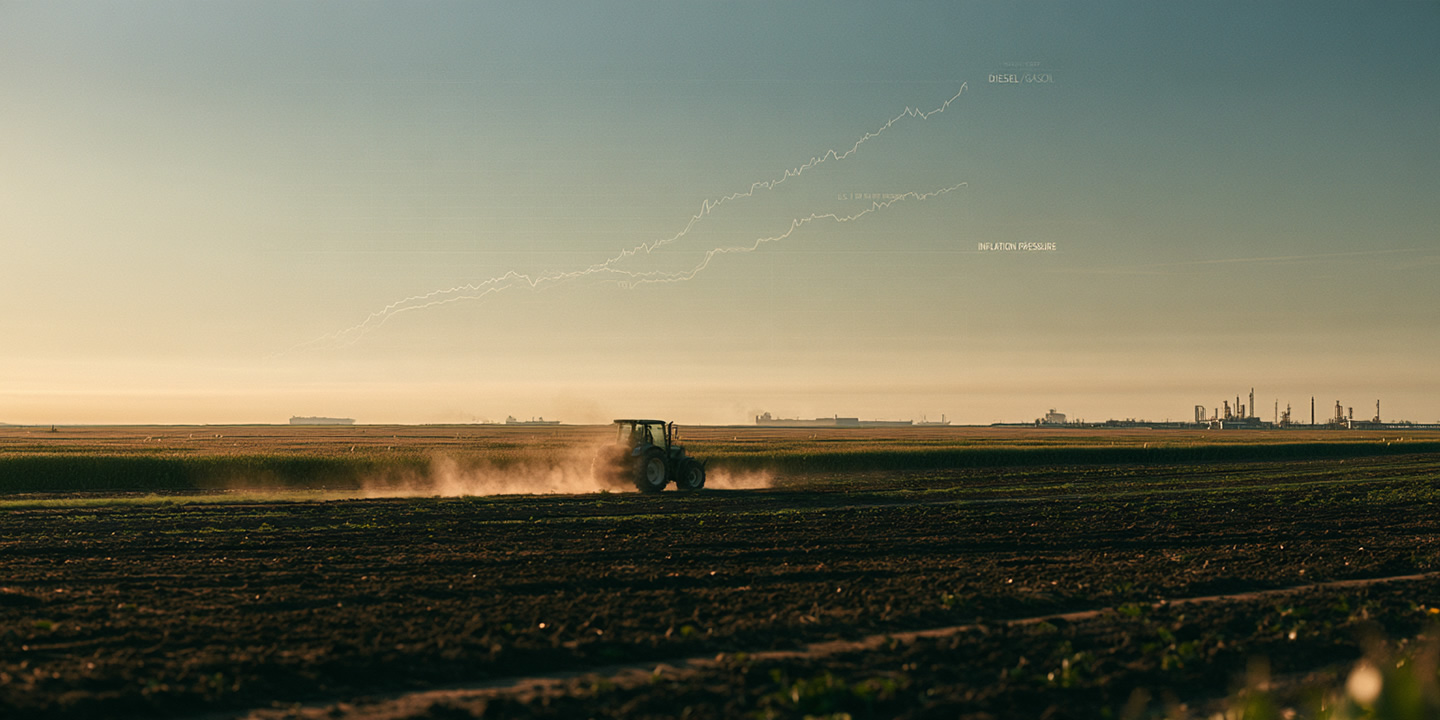
Dirt, diesel and debt are also useful ways to think about markets right now. The conflict in Iran has slowed traffic through the Strait of Hormuz, a crucial route for energy shipments, and pushed fuel prices higher. When energy costs rise, businesses pay more to grow, make and move things. Those costs can eventually show up in the prices we all pay.
That brings me to a chart I never expected to watch quite so closely: gasoil, essentially the diesel that helps power tractors, trucks and other heavy equipment. Gasoline gets more attention because we see its price every time we fill up the car. But diesel does much of the less visible work behind our food and goods. In Canada, we consume roughly 118 million litres of gasoline and 80 million litres of diesel each day.
The Bloomberg chart below compares diesel prices with the yield on the U.S. 10-year Treasury bond, a benchmark for borrowing costs. Recently, both have risen. Higher diesel prices can add to inflation concerns, and those concerns can put upward pressure on bond yields. A chart cannot prove that one caused the other, but it does show why the price of fuel in a tractor deserves a place in a conversation about markets.
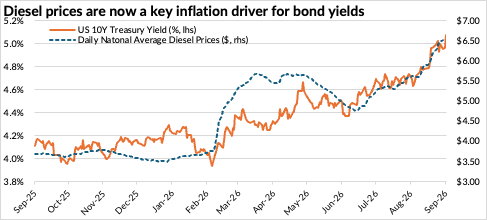
As diesel prices rise, inflation expectations rise, driving the bond yield to push yields higher. In effect the bond market is looking for additional compensation for holding debt, with rising costs of industrial production.
Agriculture Prices
Three forces could make the next trip to the grocery store a little more expensive. The first is diesel. It powers the tractors that grow our food and the trucks that deliver it. When diesel costs more, farmers’ bills rise. Food prices may follow, but that does not mean farmers are making more money.
The second is weather. El Niño is strengthening, and NOAA sees a greater than 90% chance that it becomes very strong this fall and winter. That raises the risk of poor harvests in some regions. History offers a useful caution, though: El Niño can send the price of a crop such as rice or sugar sharply higher without lifting all food prices. A good harvest elsewhere can make up for a bad one.
The third is fertilizer. Disrupted Gulf shipments and higher costs for the energy and materials used to make fertilizer have made it harder or more expensive to obtain. If farmers use less, yields could suffer in the next planting cycles. The FAO reported in September that fertilizer shipments were still being delayed. This is a risk that may show up in harvests well into 2027.
Put the three together and the balance of risks for crop prices looks tilted upward, especially if costly inputs meet an El Niño damaged harvest.
For investors, agricultural futures offer a direct way to gain exposure to crop prices without depending on whether farmers can turn higher selling prices into higher profits. Futures can also be volatile, and weather risks may already be reflected in their prices.
We see them as a potential, a carefully sized tool for this particular inflation risk, rather than a sure bet that every item in the grocery basket will cost more.