
Stephen Harvey
Chief Investment Officer
Sagard Wealth
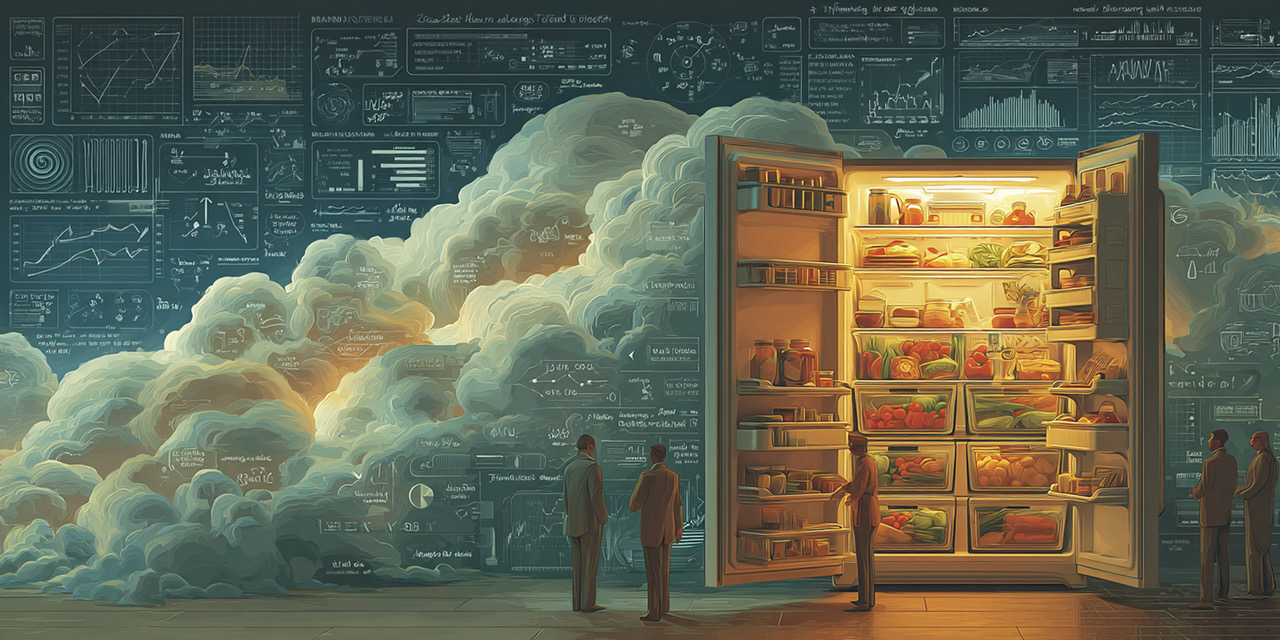
As the father of twin teenage boys, I can tell you that stocking the fridge (inventory) is a never-ending task. My wife and I used to have more of a just-in-time inventory management of food, but as the boys have grown, we’ve moved to a larger inventory of food, or you could call it a just-in-case management style.
Today we are seeing corporations, and more importantly, nations move away from “just-in-time” management towards a just-in-case approach. Does this lead to excess short-term demand as the replenishing of inventories continues and we move towards overstocking?
Japan’s Just-In-Time (“JIT”) Model
In most business schools, students are taught about Japan’s 1980s manufacturing miracle. The approach gave the world a new corporate diet plan: fewer inventories, tighter processes, and no warehouse calories. Toyota’s just-in-time system showed that capital did not need to be lounging around in piles of parts “just in case.” Instead, production could be synchronized with demand, suppliers could deliver in smaller and more frequent batches, and quality problems could be exposed quickly rather than buried under inventory. Western manufacturers, initially watching Japan eat their lunch in autos and electronics, began importing the playbook under names like lean manufacturing, kanban, total quality management, and continuous improvement. By the late 1980s and 1990s, U.S. and European firms were busily converting inventory from “safety blanket” into “balance-sheet inefficiency.”
From there, JIT escaped the factory floor and became a global operating religion. Autos, electronics, retail, aerospace, consumer goods, and eventually services, all embraced the gospel of low working capital and high asset turns. Globalization turbocharged the model: companies built intricate supplier networks, stretched supply chains across continents, and discovered that a container ship could be cheaper than a warehouse—until, of course, the ship got stuck, delayed, sanctioned, or otherwise turned into a floating macro risk factor. For decades, JIT was a beautiful trade: lower costs, better margins, higher returns on invested capital. The catch was the reliance on globalization and secure supply chains.
COVID Tested Supply Chains
COVID turned the global supply chain from a finely tuned symphony into a kazoo orchestra on a Zoom call. Countries discovered that decades of just-in-time efficiency had left them with just-in-case shortages: masks, semiconductors, medicines, shipping containers, toilet paper, bicycles, furniture, and basically anything involving a port, a chip, or a bored consumer with a credit card. Factory shutdowns in one region ricocheted across the world, ports clogged up, freight rates went vertical, and companies learned that “global sourcing” can quickly become “global scavenger hunt.” Demand also shifted violently from services to goods, so households stopped buying vacations and started buying laptops, home gyms, and patio furniture with the urgency of a hedge fund covering a bad short. The result was inflationary pressure, margin compression, delayed production, and a broad re-rating of supply-chain resilience: suddenly, inventories were not dead capital, domestic capacity was not quaint nationalism, and redundancy looked less like inefficiency and more like portfolio insurance with forklifts.
China Moves to Just in Case (“JIC”)
China has been running supply chains less like a lean manufacturer and more like a Florida resident: buy the insurance before the storm, then look annoyingly calm when everyone else discovers the storm had real impacts. Beijing’s long-running habit of stockpiling crude, metals, food inputs, and strategic materials reflects a basic reality: it is a huge commodity consumer but still depends heavily on imports for oil, gas, copper, aluminum, nickel and other key inputs. That hoarding looked particularly useful as Middle East tensions disrupted Hormuz, pushing up freight, energy and insurance costs; the Strait of Hormuz alone handles a major share of seaborne crude, gas tankers and fertilizer flows, while recent conflict sharply reduced vessel crossings and sent tanker costs higher. On oil specifically, the EIA estimates China added about 1.1 million barrels per day to strategic inventories in 2025, reaching nearly 1.4 billion barrels by December, and kept building inventories into 2026 before the Iran-related disruption. So, when shipping lanes got spicy, China had more optionality than countries running “just-in-time” energy exposure: it could lean on reserves, slow marginal purchases, absorb price shocks better, and avoid panic-buying at the top tick. In portfolio terms, China turned inventory from a working-capital drag into a geopolitical hedge; not exactly elegant, but in a world where chokepoints trade like call options on chaos, a full warehouse can be an attractive asset.
Just as my fridge management, it looks like the rest of the world could adopt more JIC practices. Further adoption could lead to a one-time commodity demand impulse, just when supply chains can’t deliver. Therefore, there are good reasons to think that inflationary pressures could remain. As I wrote in Elasticity and Skew, these markets have one way to adapt, higher prices.