
Stephen Harvey
Chief Investment Officer
Sagard Wealth
I hope you are enjoying the summer.
August can be a strange month for financial markets. Many traders are at the cottage, on the beach, or at least pretending not to check their phones. With fewer people buying and selling, markets can become a little jumpy. Small trades sometimes create surprisingly large price moves—the financial equivalent of a nearly empty swimming pool where one cannonball soaks everyone. It’s also the perfect time for governments to influence markets.
Markets are enormously powerful. They determine the prices of shares, bonds, currencies, commodities, houses, and almost everything else investors can own. Some prices are controlled or heavily influenced by regulation, but most are left to the basic forces of supply and demand: how much of something is available, and how badly people want it.
Governments do have tools to influence markets. But influencing a market is not the same as controlling it. Policymakers can lean on the steering wheel, tap the brakes, or occasionally shout at the passengers. The market, however, still has a habit of choosing the route.
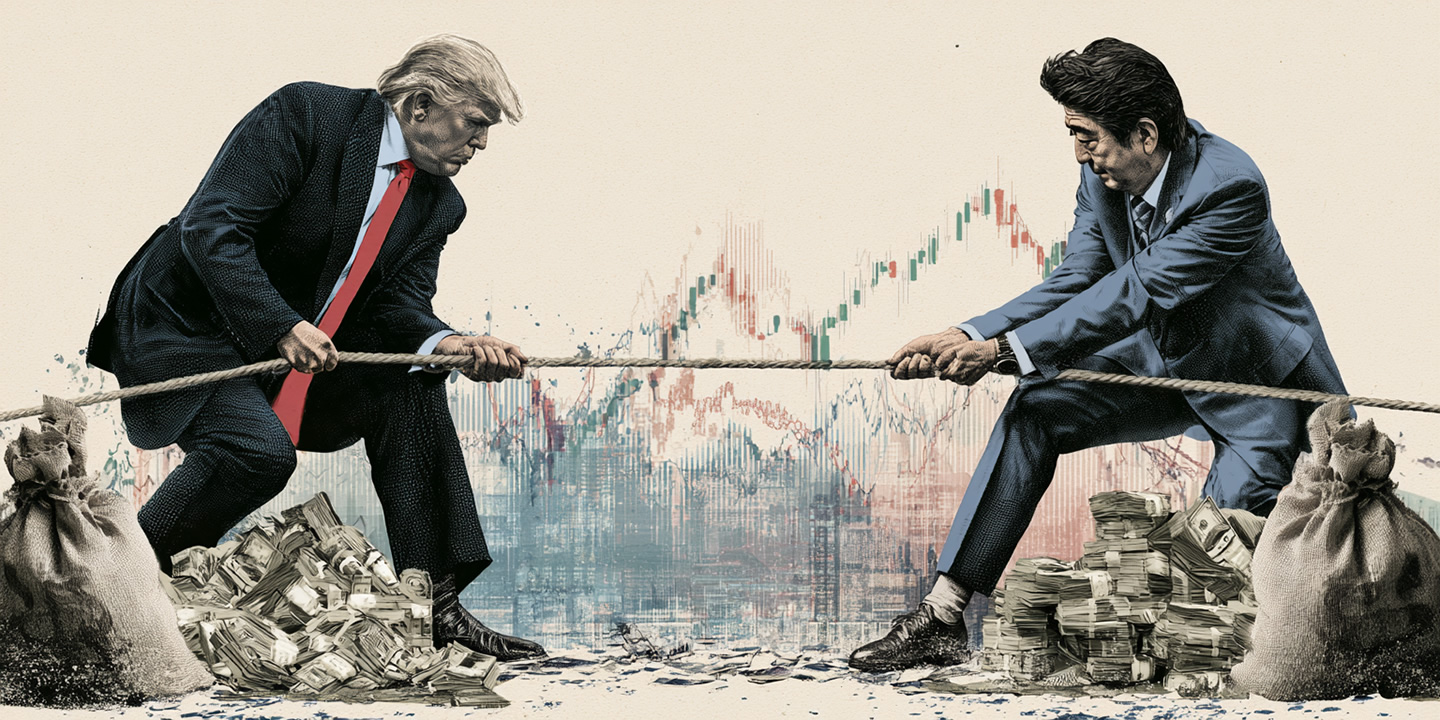
We have recently seen two good examples of this tug-of-war: long-term government bonds and the Japanese yen.
Long Dated Sovereign Debt
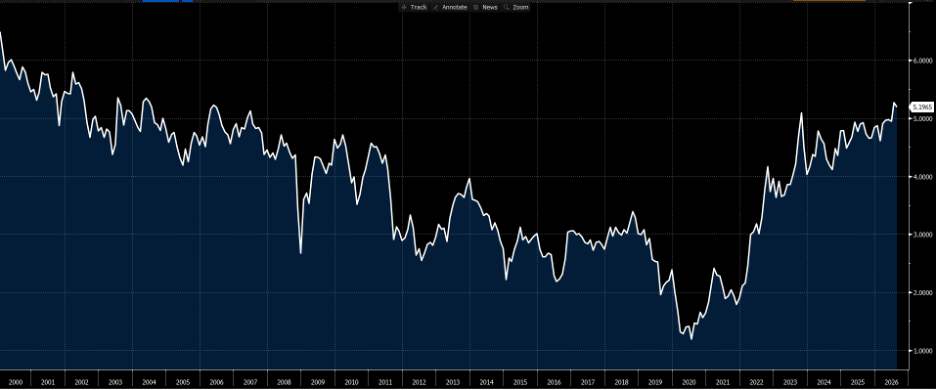
Yields on long-term government bonds have risen significantly across most developed countries, both this year and over the past several years. The Bloomberg chart below shows the yield on the 30-year U.S. Treasury bond over the past 26 years.
Source : Bloomberg
Put simply, the yield is the interest rate investors demand before agreeing to lend money to the U.S. government for 30 years. Thirty years is a long time. An investor buying one of these bonds today is effectively saying, “Here is my money. Please return it sometime around 2056.”
Naturally, investors want to be paid for taking that risk. Several forces determine the yield:
- Expected inflation: Investors want to know whether the dollars they receive in the future will still buy anything useful.
- The term premium: This is essentially a patience surcharge—the extra return investors demand for locking up their money for decades.
- Supply and demand: When governments issue more long-term bonds than investors are eager to buy, yields usually must rise to make those bonds more attractive.
The recent increase in yields therefore suggests that either investors want fewer long-term bonds, governments are issuing more of them, or some combination of the two. The U.S. Treasury would certainly prefer long-term yields to be lower. Lower yields mean the government pays less interest when financing its budget deficits. They also matter well beyond Washington: U.S. mortgage rates are heavily influenced by longer-term bond yields. When Treasury yields rise, the cost of buying a home often rises with them.
So, what can the government do? The answer depends on which part of the government is doing the influencing.
The Treasury: Change What You Borrow
The Treasury controls how much debt the government issues and when that debt must be repaid. Imagine the government has a very large credit card bill. It can choose to refinance that bill for two years, ten years, or thirty years. The Treasury therefore decides how much borrowing takes place at the short end of the market and how much takes place at the long end.
Today, the Treasury is issuing more debt with shorter maturities, where interest rates are generally lower. By issuing fewer 30-year bonds, it reduces the amount of long-term debt investors must absorb. Over time, that smaller supply could help bring long-term yields down.
This does not eliminate the debt, of course. It simply moves more of the refinancing problem into the near future—the financial equivalent of tidying the house by putting everything in one cupboard.
The Federal Reserve: Change the Price of Money
The Federal Reserve has a different toolbox.
The Fed controls short-term interest rates and influences the supply of money in the financial system. To reduce long-term bond yields, it has two main options.
First, it can buy long-term government bonds directly. This is known as quantitative easing, a phrase that sounds much more sophisticated than “the central bank buys a great many bonds.” Those purchases increase demand and can push bond prices higher and yields lower.
Second, the Fed can cut short-term interest rates and hope that longer-term rates follow. This does not always work neatly. Long-term investors may still worry about inflation, government borrowing, or the possibility that rates will eventually rise again.
Kevin Warsh, the current Federal Reserve Chair, has offered relatively little guidance about how he intends to approach these issues. Markets dislike uncertainty almost as much as they dislike bad news, and bond yields have moved higher.
The message from investors appears to be: “Until we know more, we would like to be paid extra.”
Currency Intervention: Giving the Yen a Helping Hand
Currencies are another area where governments sometimes step into the market.
Over the past two weeks, we have seen a rare and very public intervention in the Japanese yen. The effort involved not only the Bank of Japan and Japanese authorities, but also the U.S. Treasury. Why would Japan intervene in its currency? And why would the United States care?
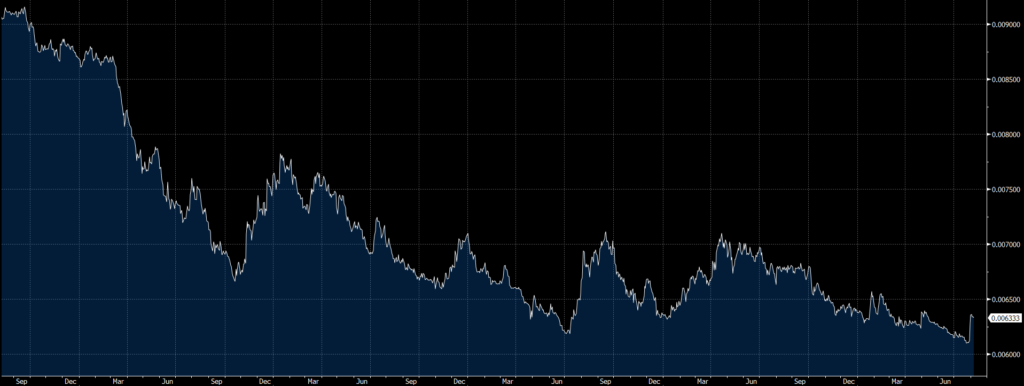
The yen has been remarkably weak against most major currencies over the past 15 years, reaching new lows in June. The Bloomberg chart below shows the value of one yen measured in U.S. dollars. A weak yen creates both winners and losers.
Japanese exporters are among the winners. When the yen falls, products made in Japan become cheaper for overseas buyers. Cars, machinery, and electronics have become more competitive in global markets. Japanese companies also earn more yen when they convert their overseas profits back into the domestic currency.
Currency traders have benefited as well. For years, many investors have borrowed money cheaply in yen and invested it in currencies offering higher interest rates. This is known as a carry trade. It is essentially borrowing from the world’s cheapest bank and depositing the money somewhere that pays more.
These investors have benefited twice: their borrowing costs were low, and the currency they borrowed continued to fall.
But a weak currency is not an unlimited free lunch. It may help exporters, but it makes imports more expensive. Japan imports a great deal of energy, food, and other goods. As the yen falls, Japanese households must pay more for fuel, overseas travel, and anything purchased from abroad.
For an economy that spent decades struggling with very low inflation, some increase in prices was initially welcome. But there is a point at which “finally, some inflation” becomes “why does everything cost so much?”
When citizens begin to feel that pain, governments tend to pay attention.
Source : Bloomberg
The Japanese government’s intervention alongside the U.S. Treasury, pushed the Yen higher by around 4%, which was a small move relative to the long-term moves. So why would the U.S. Treasury Secretary pay so much attention to another currency and post online a note showing his intention to intervene in the market?
Why Did the United States Get Involved?
The coordinated intervention pushed the yen approximately 4% higher. That is noticeable, but still relatively small compared with the currency’s long-term decline. The more interesting question is why the U.S. Treasury Secretary devoted so much attention to another country’s currency—and publicly signaled a willingness to intervene.
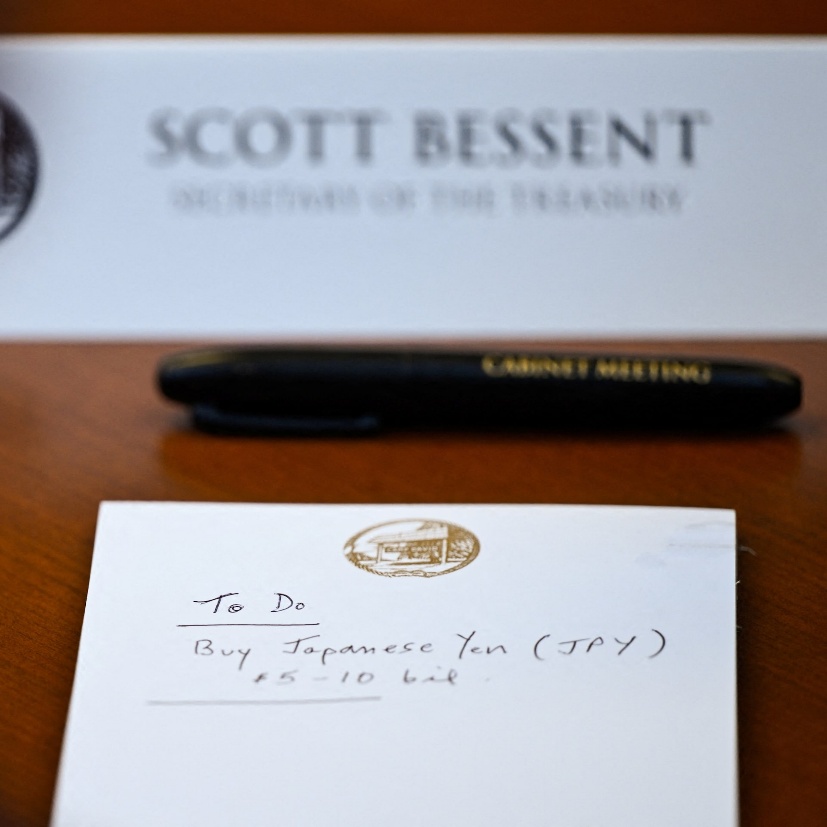
The answer brings us back to the first part of this discussion: U.S. government debt. To support the yen, Japanese authorities need to buy yen in the currency market. To buy yen, they must sell something else from their large pool of foreign reserves.
Japan’s Ministry of Finance owns more than $1 trillion of U.S. Treasury bonds. The most straightforward way to raise money for yen purchases would therefore be to sell U.S. dollar assets—potentially including Treasuries—and use the proceeds to buy yen-denominated investments such as Japanese government bonds. There is just one problem.
The last thing the U.S. Treasury wants is for one of the world’s largest holders of American debt to begin selling it. More Treasury bonds hitting the market would increase supply, potentially lower bond prices, and push yields even higher. In other words, Japan might strengthen its currency while simultaneously making it more expensive for the United States to borrow money. Washington would prefer not to solve Japan’s currency problem by creating an American interest-rate problem.
The recent intervention was therefore structured differently. Rather than selling large quantities of U.S. Treasuries, the U.S. Treasury and Japan’s Ministry of Finance focused on selling euro-denominated assets. That approach allowed Japan to support the yen without adding further pressure to the U.S. bond market. It also explains why the two countries needed to coordinate. What looked like a story about the yen was also, beneath the surface, a story about America’s borrowing costs. In financial markets, everything is connected—usually just when policymakers would prefer that it was not.
What Does This Mean for Portfolios?
There are two important investment conclusions.
1. Government Bonds Still Look Unappealing
Government bond yields are now much higher than they were several years ago, which certainly makes them more interesting. However, elevated yields do not automatically make bonds attractive.
Governments continue to issue enormous amounts of debt, while investors remain concerned about inflation and fiscal deficits. That combination creates a difficult backdrop for long-term bonds.
There will likely be a point when government debt becomes a compelling investment. High yields can eventually provide both attractive income and the potential for capital gains if interest rates decline.
For now, however, it still appears a little early to load up. The meal may be cooking, but it is not ready to come out of the oven.
2. The Yen Looks Increasingly Interesting
Owning assets denominated in yen looks much more attractive. Our Japanese equity investments are not hedged back into other currencies, meaning we retain exposure to any recovery in the yen. The same is true of our Japanese real estate investments.
It may also be time to consider owning Japanese debt directly in yen. The currency has already experienced a long and substantial decline. Japanese and U.S. authorities have now shown that they are willing to intervene when weakness becomes excessive. That does not guarantee an immediate recovery, but it may change the balance between potential gains and potential losses. From a portfolio-construction perspective, charts that resemble a staircase on the way down and an elevator on the way up can be particularly appealing.
The challenge, as always, is making sure you are standing near the elevator before the doors close.